Buying guide · Automotive
Jump starters
Choosing a Portable Jump Starter: Engine Size, Safety Features and Upkeep
How to match a lithium jump starter to your engine, which safety features matter, and when you need a battery charger instead.
Updated October 17, 2026
Short answer
Pick a jump starter by your engine's size, not by the biggest amp number: NOCO rates its 1,000-amp GB40 for gas engines up to 6.0 liters and diesels up to 3.0 liters, and its larger models for bigger engines. Look for spark-proof clamps with reverse polarity protection, and recharge it every few months so it works when you need it. If your battery keeps going flat, a jump starter only gets you going; a battery charger or a new battery fixes the cause.
At a glance
The products this guide covers, each with its own review.
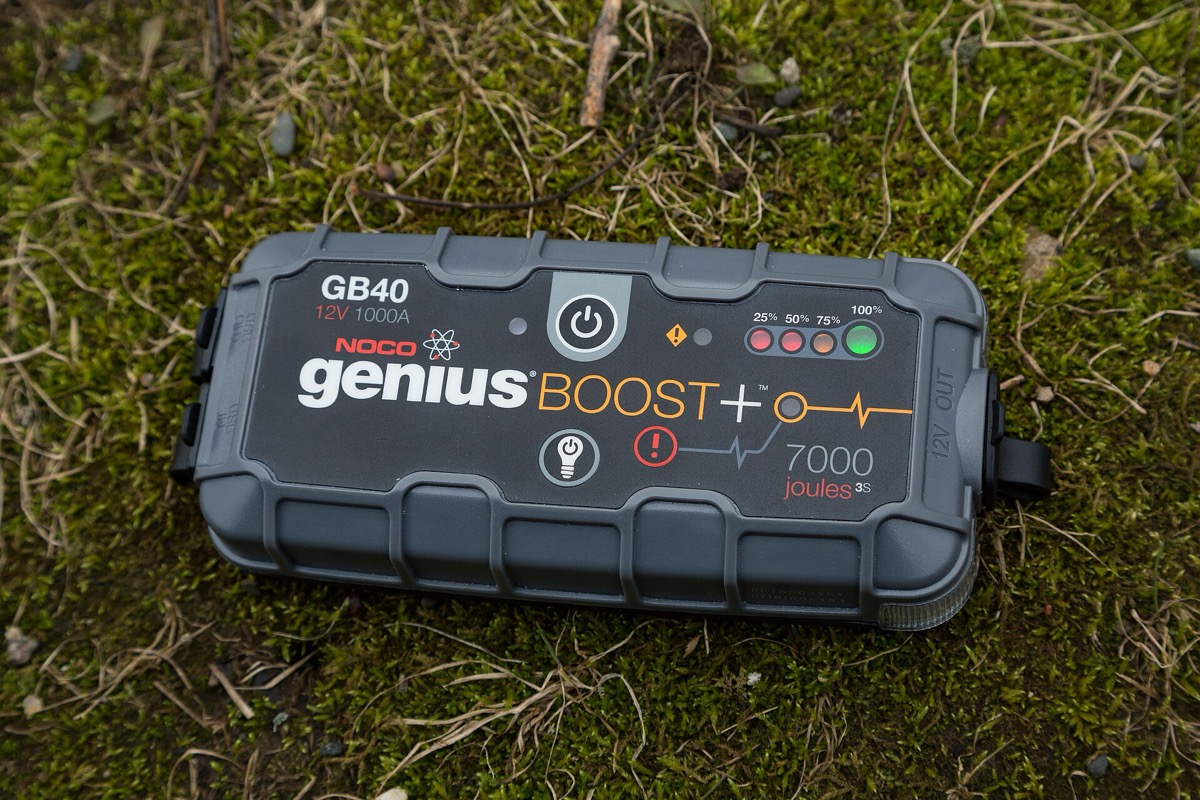
- NOCO Boost GB40 1000A Lithium Jump Starter
Best for: Starting a car with a flat battery, alone.
Watch out: Too small for big diesels.
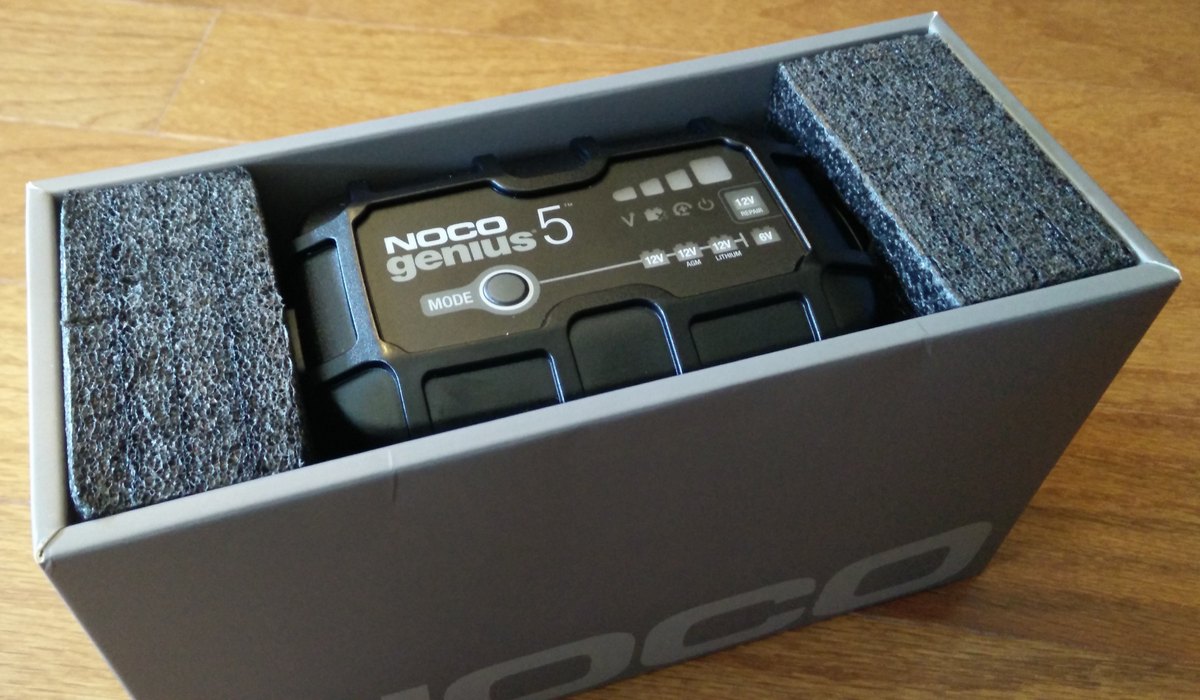
- NOCO GENIUS5 Smart Battery Charger and Maintainer
Best for: Keeping a parked car, bike or mower battery healthy.
Watch out: Not a jump starter; slow for big deep-cycle banks.
Jump starter or battery charger: which do you need?
A jump starter is a portable battery that starts your car right now, wherever you are, without a second car. A battery charger or maintainer, like the NOCO GENIUS5, plugs into a wall outlet and recharges or maintains the car's battery over hours, which is what you want for a car that sits for weeks or a battery that's getting weak.
If your car only fails to start after a cold night or a light left on, a jump starter is the right tool. If it happens again and again, the battery or the charging system needs checking; a jump starter will keep getting you going without fixing the cause.
Read our NOCO GB40 reviewRead our NOCO GENIUS5 reviewHow big a jump starter does my engine need?
Use the maker's engine rating, in liters, rather than the peak amp figure on the box. Diesel engines need more power than gas engines of the same size, so their limit is lower. Check your engine size in the owner's manual or on the registration, then pick a model rated above it.
| Model | Peak current | Gas engines | Diesel engines | Weight |
|---|---|---|---|---|
| NOCO Boost GB40 | 1,000 A | Up to 6.0 L | Up to 3.0 L | 2.45 lb |
| NOCO Boost GB50 | 1,500 A | Up to 7.0 L | Up to 4.5 L | 2.71 lb |
| NOCO Boost GB70 | 2,000 A | Up to 8.0 L | Up to 6.0 L | 4.18 lb |
Which safety features matter?
The common mistake with jumper cables is connecting the clamps the wrong way round. Look for reverse polarity protection, which stops the starter from sending power if the clamps are reversed, and spark-proof clamps. NOCO lists both on the GB40, GB50 and GB70.
Water and dust resistance help too, since you'll use it outdoors in bad weather. NOCO rates these three models IP65. All three also work as a USB power bank for a phone and have a built-in flashlight.
How do I keep a jump starter ready?
A jump starter that's flat when you need it is no help. Charge it fully when it arrives, keep it in the car, and check its charge level every few months, especially before winter. NOCO's GB40 recharges over USB-C in about three hours at 2.1 amps.
Who benefits, who should skip
- Worth buying: anyone who drives alone, parks outdoors in cold weather, or has an older battery.
- Get a bigger model: big V8 trucks and diesel engines above the GB40's rating.
- Get a charger instead, or as well: cars, motorcycles and mowers that sit unused for weeks.
Related PriceDropIQ reviews
Affiliate link — we may earn a commission.Independent buying advice, in your inbox.
New reviews and practical buying guides from PriceDropIQ.
Sources and how we checked
Engine ratings, peak current, weights, IP ratings, safety features and charging details come from NOCO's own spec pages for the GB40, GB50 and GB70 (read October 17, 2026). GENIUS5 facts come from our review, sourced from NOCO. Advice on which tool suits which driver is PriceDropIQ's editorial judgment. We have not tested these products hands-on.
- Manufacturer: NOCO — Boost GB40 specs
- Manufacturer: NOCO — Boost GB50 specs
- Manufacturer: NOCO — Boost GB70 specs
- PriceDropIQ review: PriceDropIQ — NOCO GENIUS5 review